
Gems and Radical Acceptance
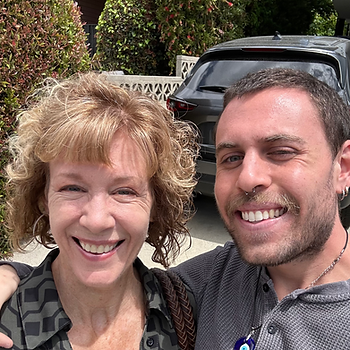
I always wanted to have children. Ever since I can remember. It took my husband and I many years and many trials before the birth of our son who is now twenty-one years old. When our children are born, we attach hopes and dreams along with expectations of how their lives will look. And for that matter, how our lives as parents will look. Making life-long friends, playing organized sports, succeeding in school, attending college, getting the perfect job to support themselves, and us as parents, watching it all unfold before our eyes. With the introduction of substance use disorder four years ago, everything changed and our world was turned upside down.
Our son told us he started smoking marijuana at sixteen. Drinking at high school parties until he passed out. Then he advanced to smoking and injecting methamphetamine. We noticed his behavior and attitude changing but didn’t know it was due to drug use and the beginning of addiction for at least a year, probably more. He left the house during the night, often not returning for several days. We didn’t know where he was and tried to communicate with him by phone. He never answered and rarely sent a text reply. He was always angry, punched holes in walls, yelled and screamed at us and then would sleep all day recovering from what we’d learn later, a meth binge. He used online apps to get drugs. We finally learned substance use disorder was to blame when my husband and I returned from a vacation and our son had taken himself to the emergency room because he was suicidal.

This was the beginning of our journey, our learning journey. Our son enrolled himself in an outpatient recovery program five days per week. It lasted less than a month and he relapsed. The director sent him to another recovery center two hours away. He left after three weeks. We went to pick him up, again rescuing him, and enabling him which we’d learn about soon. We sent him to a sixty day program three hours away from us, this time expecting he would be healed. Nope. Three weeks after this program he relapsed again. He was beaten up in the streets of downtown Los Angeles. We rescued him again and placed him in yet another recovery program. He left after five days. We picked him up and brought him home. By this time he was full on addicted to the meth and out of control. This is when we were told about PAL – Parents of Addicted Loved Ones. A support group for parents of children with SUD. This changed our lives.
Every Tuesday night on zoom, we attend a PAL meeting with twenty plus other sets of parents affected by an addicted child. We never knew anything like this existed, let alone that we’d be members of such a group. PAL taught us healthy boundaries, “gems” and “nuggets” to say to our son in conversation and began to assist us in getting our life back. We told our son he could no longer live in our home. He was on the streets, sleeping in his car for three weeks before saying he was ready for recovery. Since then he’s been to four other recovery centers and is approaching sixty days sober following four brief relapses lasting from one to five days. We still have boundaries in place and tell him, “We cannot be part of your chaos. When you’re ready for recovery, we’re here.” We’ve learned to follow radical acceptance of our son and drop all prior expectations we had and meet him where he is right now. We’ve learned about delayed emotional growth as he demonstrates the age which he began using drugs. PAL provided support for my husband and I when we had nowhere to turn and didn’t know what to do. We’ve learned to be grateful that our son is alive and be grateful one day at a time. To be thankful at least for now, that he’s choosing sobriety. We’ve learned not to answer the phone in the middle of the night, as we’re attempting to take care of ourselves and get some rest. We’ve learned we cannot help our son be healthy unless we ourselves are healthy. As parents we need to be the example of what a healthy adult looks like so our addicted children see what their lives can be. We need to be happy despite the decisions of our loved ones. This is the most difficult of all.

How can we be happy when our children are not? It takes time. Our journey has been going on more than four years now, and we still struggle, but we’re better. We can go on vacation again, go out with friends again even if our son is in crisis. We’ve learned how resilient he is and that he’s capable of getting himself to recovery when he wants to. The recovery center of his choice, not ours. We’ve taken a step back and given up management of his recovery – we just can’t control it. We didn’t cause it and we certainly wouldn’t choose it for our kids. They are the only ones who can control it. Our kids are on their own life journey. We are just the cheerleaders sitting on the sidelines, ready to tell them, “We believe in you, we know you can figure this out.” We have to be OK with the daily uncertainty of our kids’ futures. We have learned not to ask specifics about his recovery, but we do tell him that we love him unconditionally but our support for him is very conditional. Conditional upon sobriety.
We’ve met wonderful people along the way: Psychiatrists, directors, case managers, therapists, mentors, sponsors and new friends. They each have a unique perspective which has added something concrete to our journey and helped us grow. It hasn’t been perfect, but we have a better relationship today with our son than ever. We apologized for not treating him like an adult for so long. We can’t fix this or control this or love substance abuse disorder away. We’ve learned to have compassion for ourselves and work on our recovery at the same time our loved ones work on themselves. We need to be curious and not judgmental. To have patience before reacting. Not saying, “You must.” Become committed to changing your family system without destroying it. There is no right or wrong on this winding road to recovery for our children. Find a support group that speaks to you. I’m a member of three! Find at least one that will help you as parents recover. Take advantage of any parent support or group at each and every recovery center where your child may be. We can only pray and meet our loved ones where they are and when they’re ready.
Kathie Kouklis


Comments